Showing posts with label feta-land (greece). Show all posts

Thursday, October 20, 2011

Τα Χαστουκόψαρα (Τα ποια;;)

Ομολογώ με το όλο λιώσιμο της διπλωματικής μου και διααααφορα άλλα το έχω παραμελήσει το blog μου τελευταία, αλλά μιας και μου το θύμισε μία ψυχή (με την οποία απ' ότι φαίνεται συμφωνούμε ότι διαφωνούμε για την ενδεχόμενη -και καλά- χρησιμότητα του Sex and the City στην ελληνική κοινωνία) να βάλω ένα απόσπασμα από ένα αγαπημένο βιβλίο, "Τα χαστουκόψαρα", του Λένου Χρηστίδη:

Κλείνω. Μάτια.Ανοίγω. Μυαλό.Τελειώνεις το σχολείο, λες να ησυχάσεις απ΄όλους αυτούς που σου κάθονται στο σβέρκο και σου λένε τι να πιστεύεις, τι να γνωρίζεις, τι να σκέφτεσαι, τι να μαθαίνεις και πώς να το μαθαίνεις. Ξυπνάς το πρωί, πας στη δουλειά κι είναι διάφοροι τύποι που σου λένε τι να κάνεις, πώς να φέρεσαι, πώς να ντύνεσαι, πώς να είσαι, για να βγάλουν εξαιτίας σου -και με την ανοχή σου- περισσότερα λεφτά, είναι τ΄Αφεντικά. Γυρίζεις στο σπίτι, φωνάζουν οι γονείς, βουίζουν τ΄αυτιά σου, σου λένε θα πεθάνουν, εσύ θα τους πεθάνεις, αν δε μάθεις να φέρεσαι, να ντύνεσαι, να σκέφτεσαι, να είσαι όπως θέλουν Αυτοί. Πας στους φίλους σου, μία απ΄τα ίδια, όλο τα ίδια και τα ίδια και τα ίδια και τα ίδια, τρέχουμε και δε φτάνουμε, όλοι μαζί, γύρω γύρω όλοι και στη μέση εμείς. Πας στα μπαρ, βαριέσαι που ζεις, δυνατή μουσική, την αγνοείς, δεν έχει στίχους, δεν έχει κέφι, δεν έχει διέξοδο, σου λέει να χορεύεις, μόνο να χορεύεις, να κάθεσαι σαν μαλάκας χωρίς να μιλάς, μόνο να χορεύεις και να κοιτάς, να κοιτάς, να κοιτάς, να κοιτάς, τις γκόμενες, χαμένες τελείως, κοιτάνε σαν χαζές, τι φταίνε κι αυτές; το παίζουνε κάτι που δεν θα γίνουν ποτέ, πώς θα γίνει να βρεις μια γυναίκα που να μην κοιτάει σαν χαζή; ο έρωτας τι είναι; είναι να φέρεσαι σαν χαζός, όχι να είσαι. Χαμόγελα ψεύτικα, ματιές από μακριά, μπούτια, βυζιά, χείλια υγρά, όλο υποσχέσεις, μηδέν προοπτικές, μηδέν ηθικό, για να πλησιάσεις στα δέκα μέτρα θες μια ντουζίνα προφυλακτικά.
Έχει και συνέχεια, αλλά προτείνω να το διαβάσετε για να καταλάβετε.

Υ.Γ. Όχι, το υπόλοιπο βιβλίο δεν είναι έτσι αμπελοφιλοσοφικό. Είναι πιο μυθιστορηματικό και περιπετειώδες. Αλλά αυτό κεφάλαιο είναι αδιαφιλονίκητα απίστευτο.

Tuesday, June 21, 2011

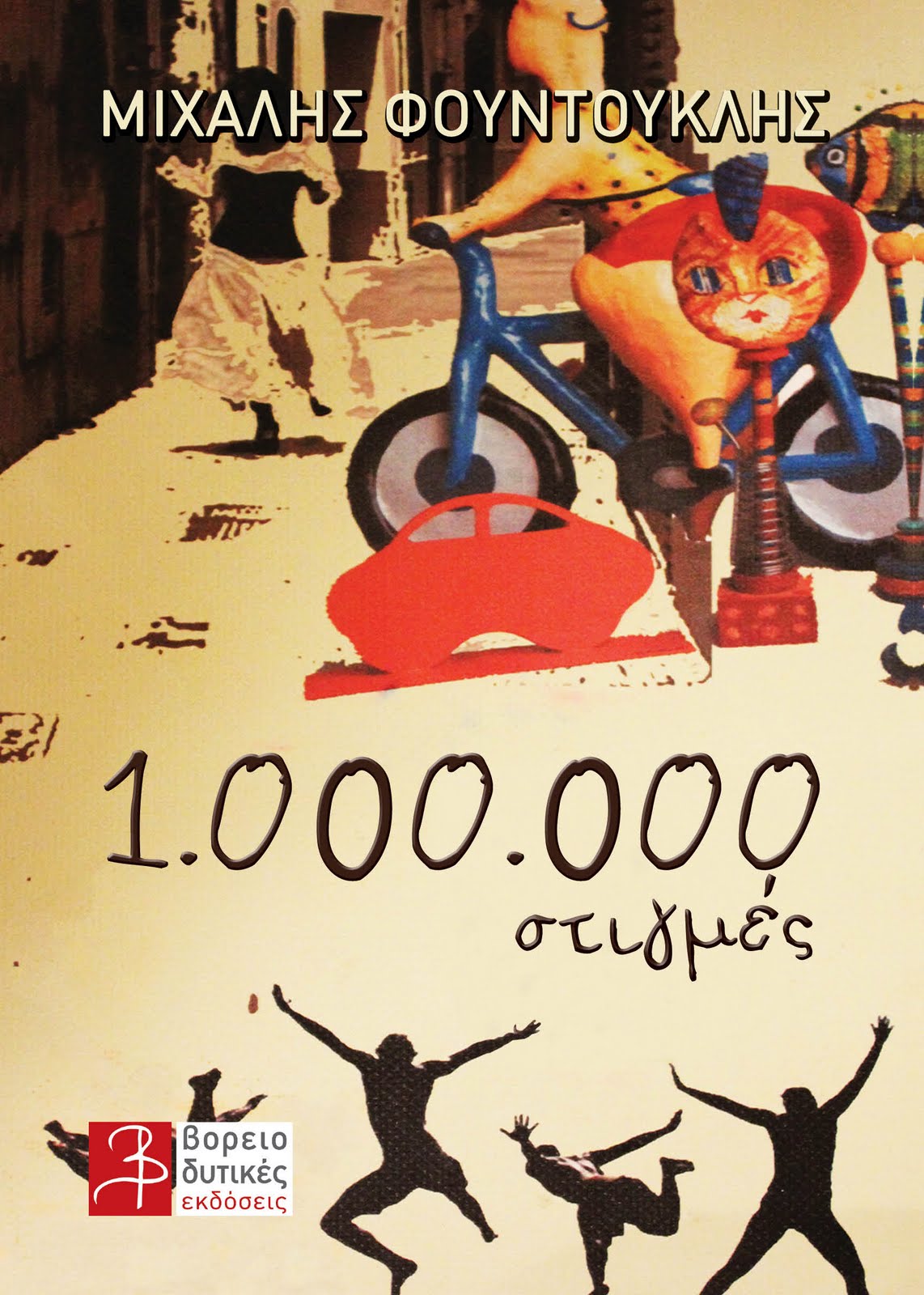
1.000.000 Στιγμές..

Πρόσφατα απέκτησα ένα e-book reader. Και σαν σεσημασμένος βιβλιοφάγος σαν πρώτη επιλογή σκέφτηκα να δω τι δωρεάν βιβλία θα μπορούσα να βρω. Μετά από πολλές ανακαλύψεις ανάμεσα σε κλασσικούρες, αρχαιοελληνικές κωμωδίες και αμερικάνικες νουβέλες βρήκα ένα βιβλίο που φαινόταν αρκετά υποσχόμενο. Υπόψιν ότι είναι τη στιγμή που τα γράφω αυτά είναι "καλοκαίρι" στην Ολλανδία, δηλαδή 10-15 βαθμούς, συννεφιές και δεν λέει να σταματήσει να βρέχει! Αλλά και να μην έβρεχε, το μπάνιο στις λίμνες ή ποτάμια που κάνουν οι ντόπιοι δεν είναι και πολύ του γούστου μου. Οπότε χρειαζόμουν κάτι να ξεχαστώ όσο να'ναι.
Χμ.. ξεφύγαμε λίγο. Το βιβλίο που ανακάλυψα λοιπόν ήταν το 1.000.000 στιγμές του Μιχάλη Φουντουκλή.

Σύμφωνα με την περιγραφή στο οπισθόφυλλο:
1.000.000 στιγμές είναι πολλές στιγμές. Στιγμές χαράς, στιγμές λύπης. Στιγμές έρωτα, απόγνωσης, φόβου, μανίας, κατάθλιψης, ελπίδας, κίνησης, στάσης. Στιγμές αναμονής, στιγμές πόνου, γέλιου, στιγμές κρύου, ζέστης, βροχής, συννεφιάς, ήλιου, πάγου, στιγμές με όνειρα, στιγμές με κέφι και χαρά, με αυτοσαρκασμό, με όρεξη για αυτοκριτική και βελτίωση. Στιγμές ανάλαφρες, στιγμές βαριές και ασήκωτες, στιγμές που όλα μοιάζουν ξένα και άλλες που όλα μοιάζουν παλιά και γνώριμα. Στιγμές βασιλικές και στιγμές να ζητιανεύουν ένα κομμάτι ψωμί. Στιγμές από μια τυχαία χρονιά, έξι τυχαίων φοιτητών. Στιγμές απ’ τον Πέτρο, τον Ανέστη που αργότερα έγινε Αλέξανδρος ή Άλεξ, ή Αλεξάκης για τους φίλους, απ’ τον Αποστόλη ή Τόλη ή Τρολ, στιγμές από τα 3Φ, τη Φένια, τη Φαίη και τη Φανή. Στιγμές από τον Κύριο Καρπούζη, τον Καβάτζα, το Λύκο, τη Γατούλα, τον Μπάμπη το σουβλατζή, τον Φρανς, τη Φραντζέσκα, την κυρα-Στέλλα, τον Φριτζ, τον κυρ-Θύμιο και τις χορεύτριες τάνγκο της Σιγκαπούρης. Στιγμές που στο σύνολό τους μιλούν για τη ζωή, τον έρωτα, την αγάπη, τη φιλία, τα όνειρα, την αυτοεκτίμηση, την πίστη και την ελπίδα, το θάνατο αλλά και την ανθρώπινη ψυχή. Όλες μαζί δημιουργούν μια εικόνα, που αν είμαστε τυχεροί θα μπορούμε γέροι πια να χαζεύουμε στον ουρανό, καθώς τα χρόνια θα σβουρίζουν γύρω μας. Και εμείς θα είμαστε αργοί και κουρασμένοι. Γιατί ένα εκατομμύριο στιγμές είναι πολλές στιγμές..
Πολύ ευχάριστο βιβλίο μπορώ να πω. Επιτέλεσε το σκοπό του και με το παραπάνω! Ένα βιβλίο που σε όλους μας θυμίζει τις 1.000.000 φοιτητικές στιγμές μας. Κυρίως ευχάριστες, αλλά και μερικές δυσάρεστες. Με μία δεμένη παρέα (έπρεπε να φτάσω στα μισά του βιβλίου για να μάθω να ξεχωρίζω τα 3Φ), πετυχημένες ατάκες και τραγούδια που όλως τυχαίως κάθε φορά πετυχαίνουν ακριβώς το κλίμα που επικρατεί. Προσωπικά μου άρεσε που σαν πόλη του έργου σκιαγραφείται η Πάτρα, καθώς εκεί πέρασα μέρος των μέχρι τώρα σπουδών μου, και ακόμα και με αλλαγμένα ίσως ονόματα μπορείς να αναγνωρίσεις διάφορα μέρη (ή και ανθρώπους!).

Για τους ξενιτεμένους μπορείτε να βρείτε το βιβλίο δωρεάν εδώ για ανάγνωση online ή κατέβασμα σαν pdf.
Για τους υπόλοιπους που σας αρέσει η μυρωδιά του τυπωμένου χαρτιού, υπάρχει ως κανονικό βιβλίο στο βιβλιοπωλείο της Πρωτοπορίας.

Πάντως πρέπει να ομολογήσω ότι σαν ενέργεια προώθησης για νέους συγγραφείς αυτό που έκαναν οι Βορειοδυτικές Εκδόσεις (να διαθέσουν κάποια βιβλία τους για δωρεάν ανάγνωση online) μου φαίνεται πολύ πετυχημένη ιδέα, και ελπίζω να αποδώσει τα μέγιστα.

Saturday, June 11, 2011

The definition of happiness..

According to Thanasis Veggos, the recently deceased famous actor, who I dare say was loved by everyone in Greece for being a simple, honest, kind-hearted man who always did his best to entertain his audience.


Τι είναι ευτυχία…

"Έπρεπε να γεράσω, αγόρι μου, για να μάθω τι είναι ευτυχία.
Τελικά ευτυχία είναι ένα ζευγάρι χέρια, δύο χέρια…
Αυτά που θα σε αγκαλιάσουν, θα σε κρατήσουν, θα σε κοιμήσουν, θα σε περιποιηθούν, θα σου μαγειρέψουν, θα σε χαιδέψουν και στο τέλος θα σου κλείσουν τα μάτια.
Τα πολλά χέρια απλά σε κατσιάζουν… Χάσιμο χρόνου. Θα το δείς κι εσύ όσο μεγαλώνεις…"

Θανάσης Βέγγος

I'll try my best to translate:

"I had to grow old, my boy, to learn what happiness is.
Finally, (I realized that) happiness is a pair of hands, two hands..
Those that will hug you, hold you, put you to sleep, take care of you,
cook for you, caress you and at the end will close your eyes.
Too many hands will only wear you down.. Its a waste of time. You will see for yourself as you grow old"

Thanasis Veggos


Source: lifo.gr

Wednesday, May 4, 2011

Φιλότιμο: the (lost?) greek sense of honor


For the greek people, there is one particular word that can't be actually translated into english, or as far as I know, any other language. That word is "filotimo" (φιλότιμο). It consist of the words φίλος(=friend) and τιμή(=honor). Google translates it as "pride". Me, if I had to translate it using only one word I would choose "earnestness". But still that wouldn't be close enough. It's a word that combines earnestness, honor, pride and dignity, but instead of an excessive or noble meaning, it has exactly the opposite. It's used to describe the pride and honor of the common people and it includes a set of unwritten rules that can keep the wheels of society running smoothly and still allow the people to walk with their head up high. It enables people who never met each other to interact with each other in a way that they can be kind and none of them tries to deceive the other. Everyone perceives it in his own way, but the result is pretty much the same.

An interesting finding while searching the internet was this blog post: http://paigewashere.blogspot.com/2010/06/blog-post.html. It shows a non-greek's view on "filotimo".

This word has been quite famous in the past and is used in many common phases, for example "Από τότε που βγήκε το συγνώμη, χάθηκε το φιλότιμο" = "Since people found out they can say they're sorry, filotimo was lost", or "Υπάρχει και φιλότιμο" = "Filotimo (thankfully) still exists". There was also this popular black and white greek movie called "Laterna, poverty and filotimo" about some really poor musicians with a laterna (barrel organ) who found a rich girl running away from home to get to her loved one and help her even though her father is paying a awful lot of money for anyone who can tell him where his daughter is.
Laterna, poverty and filotimo

But nowadays, in our industrialized, globalized Information Age, I'm afraid that notion is slowly disappearing. Watching my generation, and the ones that are coming after it, I'm starting to doubt if a part of the young people actually understand what that word means. And also some of the older people, who took advantage of the "prospering" economy the last couple of decades in ways many people wouldn't approve, seem to have forgotten all about it.
Especially with the latest news about the greek economy, I think its hard for the foreign people to believe that the Greeks have any sense of honor in their country. There are only a few who understand what is actually going on. The rest have just been in Greece for a short time, or just watch what the media serve them, so they think that the Greeks actually leave in a lawless country where anyone can do whatever they want, and the state doesn't give a damn. Sadly, the last part is true to a certain extend, but the rest is way wrong.

To clarify any possible misunderstandings, I'm not saying in any way that the Greeks are perfect or anything like that. Far from that. There are many mistakes throughout greek history, and the greeks' way of thinking or perceiving many things is wrong. But thankfully the greek people still have "filotimo" and that can be really helpful, especially in difficult times like this. Or at least I want to believe that they still do..


Thursday, April 28, 2011

Ithaka..

Back in my school years, I remember that our teacher tried to teach us one day about this famous poem, from Constantinos Cavafis based on Homer's Odyssey. I have to admit that back then I thought it was a bit stupid. Why would it be for Odysseus, who was traveling for ten years in order to get back from Troy to his home island Ithaka and his beloved wife Penelope, that his travel was actually "worth" more than his destination? And why on earth would the poet wish you a longer journey? I just couldn't understand that no matter how much I tried..
But I think getting a bit older, and being away from home, helps quite a bit..


So here it goes..

Ithaka 

As you set out for Ithaca
hope that your journey is a long one,
full of adventure, full of discovery.
Laistrygonians and Cyclops,
angry Poseidon-don't be afraid of them:
you'll never find things like that on your way
as long as you keep your thoughts raised high,
as long as a rare sensasion
touches your spirit and your body.
Laistrygonians and Cyclops,
wild Poseidon-you won't encounter them
unless you bring them along inside your soul,
unless your soul sets them up in front of you.

Hope that your journey is a long one.
May there be many summer mornings when,
with what pleasure, what joy,
you come into harbors you're seeing for the first time;
may you stop at Phoenician trading stations
to buy fine things,
mother of pearl and coral, amber and ebony,
sensual perfume of every kind-
as many sensual perfumes as you can;
and may you visit many Egyptian cities
to learn and learn again from those who know.

Keep Ithaka always in your mind.
Arriving there is what you're destined for.
But don't hurry the journey at all.
Better if it lasts for years,
so that you're old by the time you reach the island,
wealthy with all you've gained on the way,
not expecting Ithaca to make you rich.
Ithaca gave you the marvelous journey.
Without her you would have not set out.
She has nothing left to give you now.

And if you find her poor, Ithaca won't have fooled you.
Wise as you will have become, so full of experience,
you'll have understood by then what these Ithacas mean.

For those of you too bored to read, you could just watch this video with the poem read by Sean Connery (yes the famous James Bond guy!).


Thanks Gianni for reminding me of this!
Και για να μην πεταχτεί κανείς να πει καμια εξυπνάδα, όχι δεν το παίζω κουλτουριάρης! Χαχαχα!

Friday, April 22, 2011

Homer, Tree-gum and the Rocket war!

Since I've decided to do this, its only proper to present the place I'm proud to call home. It is one of the biggest islands in the north-east part of the Aegean Sea, named Chios. There are many speculations as to why it was named Chios. The most prominent ones are that it was either after Chioni (Χιόνη), the daughter of Oinopion the first ancient king of Chios who came from Crete, or from Chios (Χίος), son of Poseidon, who was named after snow (χίονι) because it was snowing the day he was born.
The town of Chios

Chios is mostly famous for three reasons.
The main one is that it is the only place on Earth you can grow and collect a special kind of tree resin, which has many medicinal uses, is used for cooking or of course you can just chew it as a gum. It is also nicknamed "tears of Chios". There is a traditional procedure to produce mastic, which is still kept in the medieval castle-villages called the Mastic-villages to the south of the island.

Mastic
The second reason, is that Chios is the home island of the famous ancient greek epic poet Homer (the one who wrote "Iliad" and "Odyssey"). You even find the place that is considered to be the place he used to teach, know as "Δασκαλόπετρα" which means "The teacher's stone".

Last, there is one more reason it is really famous for. During the Easter, on Saturday night, after the priest reads the gospel and announces that Jesus has resurrected, two orthodox churches on two opposite hills celebrate in a strange way. They hurl rockets at each other, each one trying to aim the other's bell tower. Yeah, yeah, i know.. it sounds a bit crazy and dangerous. But everyone is doing their best to prevent injuries or fires, so the damage is contained. And it is a really wonderful scene.